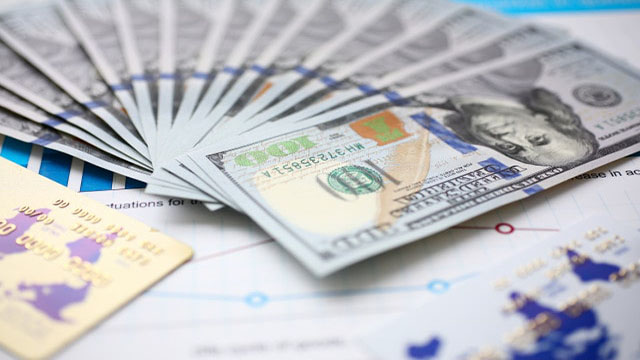
The US dollar is trading slightly lower as investors await the release of May personal consumption expenditure data, due at 12:30 GMT. The currency’s hesitation comes after a recent advance that pushed the US Dollar Index close to its highest level in more than a year.
The Dollar Index was last near 102, down modestly on the day after reaching 102 on Wednesday. Market attention is now centered on the PCE report, which is widely viewed as the most important inflation indicator for the Federal Reserve. The core PCE measure is expected to rise 3.4% from a year earlier, up from 3.3% in April.
That expected acceleration keeps pressure on the outlook for US monetary policy. Energy-driven inflation has reinforced expectations that the next move from the Fed is more likely to be a rate increase than a cut. Market pricing reflects that shift, with traders now assigning an 82% chance of a rate hike this year and a 42% probability of at least two increases.
Those expectations mark a sharp reversal from the earlier view that the Fed might begin easing policy with two cuts. That earlier outlook was overtaken by renewed inflation concerns following the conflict in the Middle East, which contributed to higher energy prices and broader price pressures.
The core PCE index strips out food and energy to provide a clearer reading of underlying inflation. Because it is the Fed’s preferred gauge, a stronger-than-expected result would likely support the dollar by strengthening the case for a more restrictive policy stance. A softer reading would have the opposite effect and could ease some of the recent upward pressure on the currency.
The Bureau of Economic Analysis will also release monthly figures for personal income and personal spending alongside the PCE report. Together, these data will help shape expectations for the Fed’s next policy steps and determine whether the dollar can extend its recent strength. silver extended its decline for a third straight session on Thursday, with XAG/USD trading near $57 an ounce during Asian hours. The metal remains under pressure as markets increasingly expect the Federal Reserve to maintain a tighter policy stance. That shift has been reinforced by recent comments from Fed Chair Kevin Warsh, who underscored a firm commitment to bringing inflation back under control and said the broader economy remains on stable ground.
Market pricing reflects that change in tone. The CME FedWatch tool now shows an 83.1% probability that the Fed will raise rates by the end of December. For silver , the prospect of higher borrowing costs is particularly important because the metal does not generate income. As yields and rate expectations rise, non-yielding assets tend to lose appeal relative to interest-bearing alternatives.
Broader inflation developments have offered little support. Recent progress in US-Iran peace talks helped push oil prices back toward pre-conflict levels, easing some energy-related inflation pressure. Even so, that improvement has not offset the more immediate impact of firmer rate expectations. Traders appear focused less on slowing price pressures in energy markets and more on the risk that the Fed will stay restrictive for longer than previously expected.
Attention is now turning to the upcoming US Personal Consumption Expenditures data, the Fed’s preferred inflation gauge. Economists expect headline PCE inflation to rise to 4.1% year over year in May from 3.8% in April, while core PCE is seen increasing to 3.4%. A reading above forecasts would likely strengthen the case for tighter policy and add further pressure to silver .
The stronger US Dollar Index is also weighing on prices. The dollar remains near a one-year high around 102, making silver more expensive for overseas buyers and reducing demand. With both rate expectations and currency strength working against it, silver faces a difficult near-term outlook.