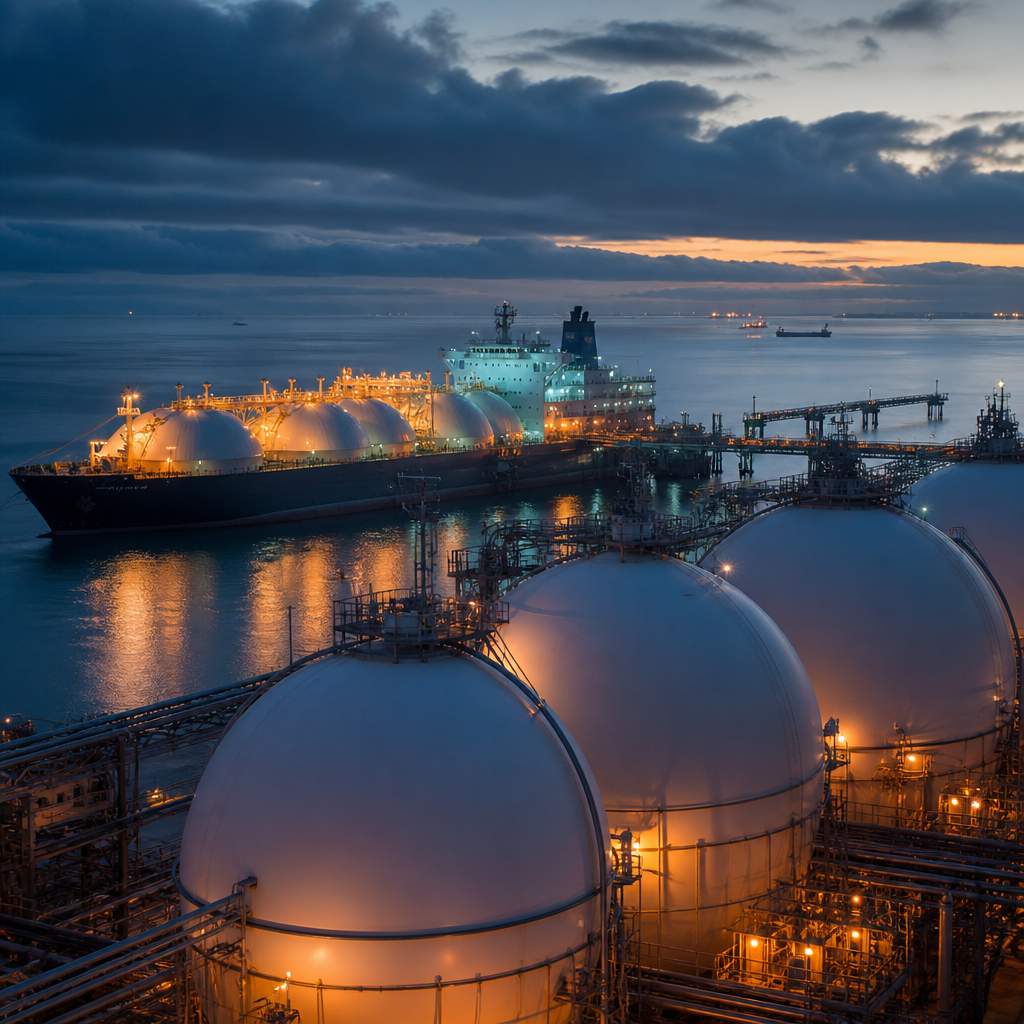
Global LNG prices could rise sharply this winter as Europe’s gas stocks sit at their lowest levels in years and North Asian buyers face tougher competition for cargoes while the Strait of Hormuz remains closed, executives said at an industry conference this week. The warning points to a tighter market heading into the colder months, when demand typically strengthens and storage levels matter more.
What is driving the LNG price risk?
The key pressure point is Europe’s low inventory base. According to the executives cited by Reuters at the conference this week, Europe is holding its lowest gas stocks in years. That matters because lower storage leaves the region more exposed to winter demand and can force buyers back into the spot market if consumption rises faster than supply can adjust.
When storage is thin, LNG cargoes become more valuable. Traders often watch European inventories as a signal for how aggressively buyers may need to bid for supply. If replenishment needs remain high while winter demand builds, prices can move quickly.
Why does Europe matter so much?
Europe is a major destination for LNG cargoes, so its storage position can influence global flows. A weaker stock position in Europe can pull more cargoes toward the region, especially if buyers are trying to secure supply ahead of peak winter usage. That can leave fewer volumes available for other importing regions.
For traders, the message is straightforward: a low-stock Europe can tighten the global balance even before cold weather fully arrives. That is why the level of storage is often read as a pricing signal, not just a local data point.
What does this mean for North Asian buyers?
North Asian buyers could face increased competition, the executives said, because the market may be drawing from a smaller pool of flexible cargoes. If Europe bids more aggressively to rebuild stocks and meet winter demand, Asia may have to compete harder for the same supply.
That competition can matter most for buyers that rely on spot cargoes rather than long-term contracted supply. Spot buyers are typically more exposed to fast changes in market pricing, shipping availability and regional demand shifts.
- Lower European stocks can lift demand for LNG cargoes into Europe.
- Stronger European buying can reduce available supply elsewhere.
- North Asian buyers may need to pay more if competition intensifies.
- Spot market traders are usually the most sensitive to these swings.
How does the Strait of Hormuz factor in?
The executives also pointed to the Strait of Hormuz remaining closed, which adds another layer of uncertainty to global energy flows. As described in the Reuters report, that closure contributes to the competition North Asian buyers may face this winter.
For market participants, any disruption tied to a major shipping route can amplify volatility. Even without a detailed supply breakdown in the report, the implication is clear: a closed Strait of Hormuz complicates logistics and can intensify the scramble for alternative barrels and cargoes.
What should traders watch next?
Traders will likely focus on whether European storage levels continue to look tight as winter approaches and whether buyers in Asia become more active in securing cargoes. The pricing response will depend on how quickly supply can be directed toward the regions showing the strongest demand.
Because the Reuters report was based on comments from executives at an industry conference this week, the signal is forward-looking rather than a snapshot of current prices. Still, the combination of low European stocks and heightened competition for LNG cargoes is the kind of setup that can support sharp moves if weather, shipping or demand conditions worsen.
What is the market setup now?
The setup described by the executives is a classic winter squeeze risk: depleted storage in one major consuming region, stronger seasonal demand, and a shipping-route complication that may limit flexibility. For traders, that can translate into higher volatility across LNG-linked contracts and regional gas pricing.
The report does not provide a specific price target or timeline beyond this winter, but it does make one thing clear: the market enters the season with less room for error than usual.
Risk disclaimer: Commodity prices can move quickly and unpredictably; this article is for information only and is not investment advice.