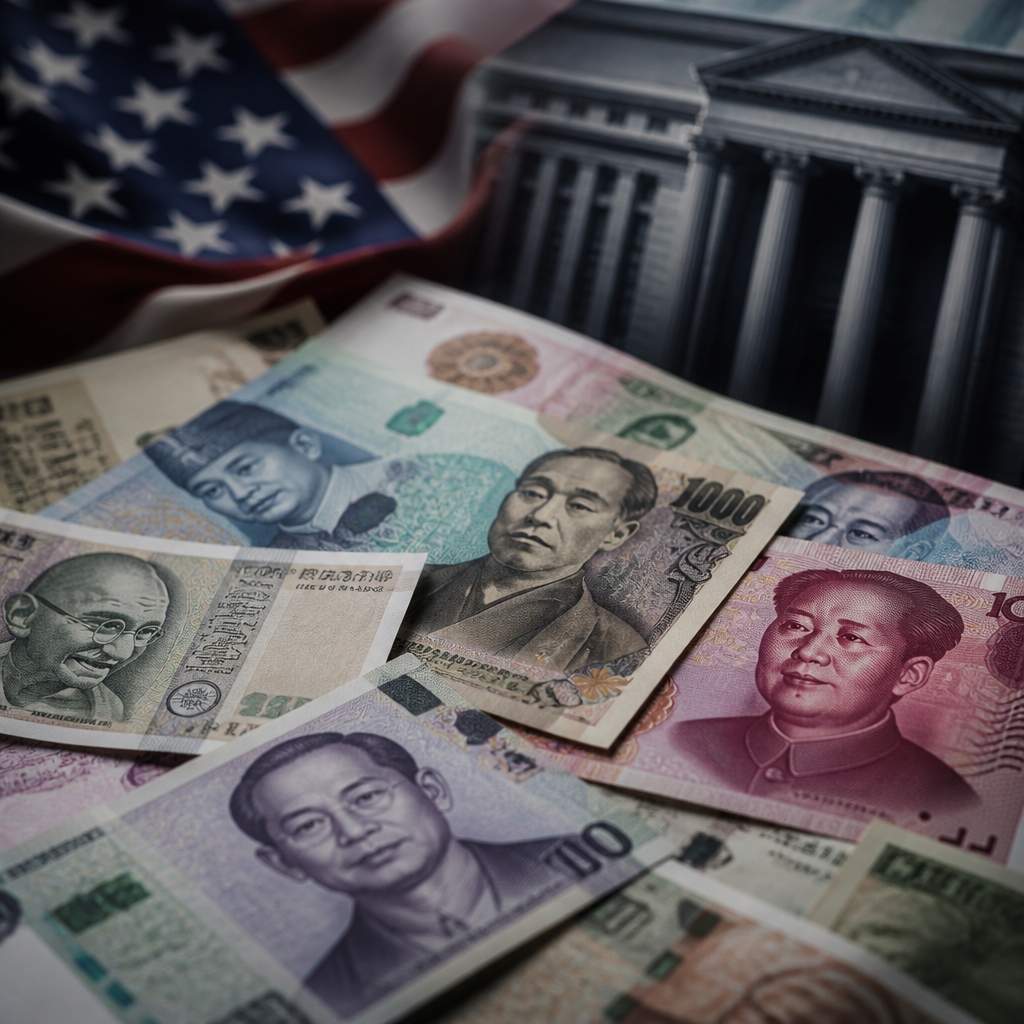
Asian currencies consolidated against the US dollar in the latest trading picture, but they remained under pressure from expectations that the Federal Reserve will keep raising interest rates. The result was a market that looked steadier, yet still vulnerable to any move higher in US rate bets, according to the wsj.com report.
What happened?
The source story said Asian currencies held their ground versus the dollar, with no sign of a broad breakout in either direction. That kind of consolidation usually points to traders waiting for clearer signals before making larger bets.
At the same time, the dollar’s underlying support from Fed policy expectations continued to matter. Even without a fresh shock in the market, the prospect of more US rate increases kept the pressure on regional currencies.
Why does the Fed matter here?
Fed rate expectations are a key driver of currency moves because higher US interest rates tend to make dollar assets more attractive. When that happens, the dollar can strengthen and Asian currencies can struggle to gain traction.
In this case, the source indicated that the market was not reacting to a single dramatic catalyst. Instead, the steady drag came from the same theme traders have been following: the path of US rates and what it means for the dollar.
How should traders read this setup?
For traders, consolidation can be a sign of balance, but it does not always mean the pressure has gone away. If Fed rate hike expectations stay firm, Asian currencies may continue to find rallies difficult to sustain.
- Steady trading: Asian currencies were not showing a sharp move against the dollar.
- Policy pressure: Expectations for Fed rate increases still weighed on sentiment.
- Dollar support: Rate bets kept the US currency in a stronger position relative to the region.
What is next?
The immediate focus remains on whether expectations for further Fed tightening shift. If they do, that could change the tone for Asian currencies quickly. If not, the region may stay in a holding pattern, with the dollar retaining an edge.
For now, the message from the source is straightforward: Asian currencies were stable, but not free from pressure, and US rate expectations were still setting the tone.
Risk disclaimer: This article is for information only and is not investment advice.