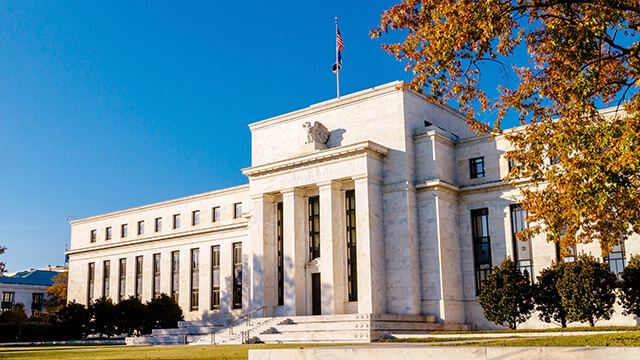
Federal Reserve officials were divided last month over whether to raise interest rates or hold them steady, with many pointing to accelerating artificial intelligence investment as a new source of inflationary pressure, according to minutes from the central bank’s latest policy meeting. The discussion took place at the first meeting led by Chair Kevin Warsh.
Policymakers said strong demand for AI infrastructure would likely keep upward pressure on the prices of technology products and electricity. The issue is increasingly affecting semiconductors, data center equipment and power consumption, as companies race to expand capacity for AI workloads. That has lifted costs across parts of the electronics supply chain and contributed to what some analysts have described as chipflation.
Officials also said inflation is likely to stay elevated in the near term, although some expected price pressures could ease if geopolitical tensions in the Middle East diminish. Even so, the balance of risks was seen as leaning to the upside. Several participants noted that growth in economic activity above potential output, partly driven by heavy AI-related business investment, could reinforce inflation over time.
The central bank’s updated projections showed a more hawkish outlook than before. The so-called dot plot indicated that officials expect interest rates to remain elevated for longer, with nine of 18 members projecting at least one rate increase before the end of 2026 and six anticipating two quarter-point hikes. The Fed’s year-end inflation forecast, measured by the personal consumption expenditures index, was also revised higher, rising to 3.6% from 2.7%.
At its June meeting, the Fed left its benchmark rate unchanged at 3.5% to 3.75%. Futures markets currently imply a strong probability that policymakers will again hold rates steady at the next meeting on July 29.
For markets, the combination of firmer inflation and tighter monetary conditions remains a concern. Higher rates and reduced liquidity can weigh on risk assets, including crypto, while making cash and fixed-income investments more attractive. At the same time, AI remains a powerful economic force — supporting growth while also complicating the inflation outlook.The USD/JPY pair drifted lower in Asian trading on Thursday, pausing after four consecutive daily gains, but the move lacked strong bearish follow-through. Spot prices were last seen a little below 163, still close to the four-decade peak reached last week.
Caution has increased among yen bears as market participants assess the risk of intervention by Japanese authorities to slow the currency’s decline. That concern has encouraged some traders to reduce short-yen positions. At the same time, the US dollar has lost some momentum, as the latest Federal Reserve minutes did not deliver a clear hawkish surprise and failed to provide a fresh catalyst for buying.
Even so, the dollar’s pullback appears limited. Investors continue to expect that the Fed could deliver at least one rate hike in 2026, while the minutes from the June policy meeting showed officials still focused on bringing inflation back to 2%. The Fed is widely expected to leave rates unchanged in July, with policy seen remaining relatively restrictive for longer.
The yen remains under pressure from the large gap between US and Japanese interest rates. The Fed’s benchmark rate is expected to stay in the 3.50% to 3.75% range, while the Bank of Japan has only recently moved its policy rate to 1.0%. That spread continues to support carry-trade activity, where investors borrow in yen to fund higher-yielding assets elsewhere.
Geopolitical tensions have also helped limit downside in the dollar and may continue to underpin USD/JPY . Fresh US military strikes against Iran, followed by retaliatory attacks on US installations in Bahrain and Kuwait, have revived demand for the dollar’s safe-haven appeal. Washington’s declaration that the ceasefire with Iran is over further adds to the uncertain backdrop.
Overall, the pair remains under mild downward pressure, but intervention concerns, policy divergence, and geopolitical risk are likely to keep sellers cautious for now.